








The Simple Assessment System That Shows Clients How Far They’ve Come
Self-assessments are a valuable aspect of life coaching. You need to help your clients look into themselves.
If you want your clients to get the most they can from your coaching, you should incorporate coaching forms and assessments. Self-assessments, progress assessments, quizzes, and other evaluations are useful ways for clients to clarify their goals and values and see whether they are actually moving toward what they want.
Key Takeaways
- Use assessments throughout the coaching relationship. A useful assessment process establishes a starting point, identifies the current focus, checks progress during coaching, and reviews what has changed.
- Choose assessments for a specific decision. Every questionnaire, worksheet, rating, or review should help you understand something that affects what you and the client do next.
- Compare progress against a baseline. Repeating selected questions or measures makes change easier to see than relying on either the coach’s or client’s memory.
- Turn assessment results into action. Useful results should lead to a decision, such as continuing the current approach, changing the goal, narrowing the focus, or choosing a different action.
- Keep the process proportionate. A two-minute progress check can sometimes tell you more than another lengthy questionnaire. Assess only when the answers will inform the coaching.
How Should Life Coaches Use Assessments With Clients?
Life coaches should use assessments to establish where a client is starting, clarify what needs attention, monitor movement during coaching, and review what has changed. The assessment itself is not the coaching. Its value comes from helping the coach and client make better decisions about goals, actions, focus, and next steps.
A useful assessment process can therefore run throughout the coaching relationship. You might use a broader intake or baseline assessment before coaching begins, a more targeted assessment when a specific issue emerges, brief progress checks during the engagement, and a review assessment at a meaningful milestone or at the end of a package.
The key question is not, “What assessment can I give this client?” It is, “What do we need to understand or measure next?”
Why Use Coaching Forms and Assessments as a Coaching Tool?
As a life coach, you are helping to guide your clients on a path of personal discovery and development. On this coaching journey, you probably hope that you are guiding your clients in the right direction, but you can do more than hope. You can use assessments to help make sure both you and your client are aimed in the right direction.
SEE ALSO: If you’re a coach looking to streamline your administrative tasks and save time, check out our Coaching Administration Software. It’s a simple, effective solution designed to help you focus less on paperwork and more on what matters—coaching your clients. From scheduling to client management, our software gives you the tools to run your business efficiently. Ready to reclaim your time and boost productivity? Click or tap here.
To have a coaching business that makes a maximum impact for your clients, you need to incorporate a variety of coaching forms and assessments. These assessments can become an integral part of the coaching you offer because they give you another source of information beyond what happens in conversation.
An assessment can reveal a gap between what a client says they want and what is actually happening. It can show that a goal is becoming less relevant, that an action is not producing the expected result, or that the client has made more progress than they have noticed.
What Does a Useful Coaching Assessment Cycle Look Like?
A useful coaching assessment cycle moves through four jobs: Baseline → Focus → Pulse → Review. Each stage answers a different coaching question, so the assessment process leads somewhere instead of producing a pile of completed forms.
Baseline: Where is the client starting? Capture enough information to establish the current situation, priority, goal, or behavior before you begin working on it.
Focus: What deserves attention now? Once the broad picture is clear, narrow the assessment to the specific issue you are coaching.
Pulse: What is changing while you work on it? Use short check-ins, ratings, reflection questions, action tracking, or repeated measures to see whether the work is producing movement.
SEE ALSO: If you’re a coach looking to streamline your administrative tasks and save time, check out our Coaching Administration Software. It’s a simple, effective solution designed to help you focus less on paperwork and more on what matters—coaching your clients. From scheduling to client management, our software gives you the tools to run your business efficiently. Ready to reclaim your time and boost productivity? Click or tap here.
Review: What has changed, and what comes next? Compare the current picture with the baseline and decide whether the original goal has been reached, needs changing, or leads naturally into another coaching priority.
Imagine a leadership coach whose new client says she wants to “feel more confident at work.” A baseline conversation and assessment show that the issue is not general confidence. She consistently stays silent when senior colleagues challenge her recommendations.
That gives the coaching a more useful focus: speaking up when her expertise is questioned.
Over the next several sessions, the coach can track something observable, such as how many times the client contributes her position in difficult meetings and how capable she rates herself immediately afterward. At review, coach and client can compare that evidence with the starting point instead of asking vaguely whether she “feels more confident.”
That is what makes assessment useful. It connects reflection to a coaching decision.
What Makes a Coaching Assessment Worth Using?
A coaching assessment is worth using when its answers can influence what you and the client do next. If you cannot explain what decision an assessment will help you make, it is probably collecting information you do not need.
SEE ALSO: If you’re a coach looking to streamline your administrative tasks and save time, check out our Coaching Administration Software. It’s a simple, effective solution designed to help you focus less on paperwork and more on what matters—coaching your clients. From scheduling to client management, our software gives you the tools to run your business efficiently. Ready to reclaim your time and boost productivity? Click or tap here.
A simple quality test is to ask:
- Does it have one clear purpose? Know whether you are establishing a baseline, exploring an issue, checking progress, or reviewing outcomes.
- Does it relate to the client’s actual coaching goal? A general life questionnaire may add little when the real coaching focus is a specific delegation problem.
- Can the client answer it meaningfully? Questions should be concrete enough that the client knows what they are rating or describing.
- Can you act on the result? Answers should lead naturally to a question, goal, experiment, action, or change of direction.
- Can it be compared later if progress matters? If you want to show change, capture the starting point in a form you can revisit.
- Does it belong within coaching? A reflection or progress tool is different from an instrument intended to diagnose a mental health condition. Use assessments that fit your role, training, and purpose.
For example, asking a career coaching client to rate “overall happiness” from 1 to 10 may generate an interesting conversation, but it gives you little direction by itself. Asking the same client to rate clarity about their next career move, confidence discussing their experience in interviews, and the number of targeted applications completed gives you information you can coach around.
If you use LCH Core, reusable worksheets, goals, action items and resources can help you keep this assessment-to-action process connected to the rest of the client’s work instead of recreating it in separate files.
When Should You Use Coaching Forms and Assessments?
Assessments should be used throughout your entire coaching relationship with your client. By using coaching forms and assessments, you and your clients can identify a path that helps them grow and make deliberate changes.
Before you even get started coaching, a self-assessment performed by your client can be quite telling. By asking a client to evaluate something such as their goals for the next six months, you can begin with information about where they are now and where they want to go.
Good self-assessments with a new client can help the people you work with honestly identify their goals and values and pinpoint what they want. You can use the information from these early coaching forms and assessments to help guide the work that follows.
SEE ALSO: If you’re a coach looking to streamline your administrative tasks and save time, check out our Coaching Administration Software. It’s a simple, effective solution designed to help you focus less on paperwork and more on what matters—coaching your clients. From scheduling to client management, our software gives you the tools to run your business efficiently. Ready to reclaim your time and boost productivity? Click or tap here.
As you continue working with a client, ask them to do a progress assessment periodically. These continuing assessments can be examined alongside earlier evaluations so clients can see changes that might otherwise be easy to overlook.
You can also use a progress assessment or special quiz focused on a particular area of life the client is working on. If you have a client trying to strike a better balance between work and family time, for example, you could offer a work-life balance assessment focused on the behaviors and choices creating the problem.
Coaching forms and assessments tailored to a specific issue can help clients examine obstacles that may be hindering their progress and decide what needs to change next.
Which Assessment Should You Use at Each Stage of Coaching?
The right assessment is the one that matches the question you need answered at that stage of coaching. You do not need one giant questionnaire that attempts to measure everything.
At the beginning of a coaching relationship, a baseline or intake assessment can capture goals, current circumstances, expectations, recurring obstacles, and what the client wants from coaching.
Once the coaching focus becomes clearer, use a focused assessment. A business coach working with a client on delegation might examine what the owner currently delegates, what they keep doing themselves, how much time those tasks consume, and what prevents them from handing the work over.
SEE ALSO: If you’re a coach looking to streamline your administrative tasks and save time, check out our Coaching Administration Software. It’s a simple, effective solution designed to help you focus less on paperwork and more on what matters—coaching your clients. From scheduling to client management, our software gives you the tools to run your business efficiently. Ready to reclaim your time and boost productivity? Click or tap here.
During the engagement, a pulse assessment should be lighter. You may ask the client to rate a target behavior, report whether an agreed action happened, or answer two or three repeat questions before a session.
At a milestone, use a review assessment. Revisit the original goal, selected baseline questions, completed actions, and observable outcomes. Then decide what the evidence says.
This also prevents a common mistake: using the same assessment simply because it is part of your usual client packet.
A new leadership client who cannot identify what needs to change may benefit from a broad starting assessment. Six sessions later, when the client is working specifically on giving difficult feedback, another broad assessment adds noise. A short review of actual feedback conversations, avoidance patterns, and outcomes is more useful.
When onboarding a new client, intake questions can also be incorporated into a Welcome Package alongside the welcome letter, coaching agreement with electronic signature, and other forms. That keeps the initial assessment connected to the rest of the onboarding process rather than arriving as an unrelated questionnaire.
How Do You Turn Assessment Results Into the Next Coaching Move?
Assessment results should lead to one of five practical decisions: continue, narrow, revise, change the action, or investigate. Collecting answers without making a decision from them turns assessment into administration rather than coaching.
SEE ALSO: If you’re a coach looking to streamline your administrative tasks and save time, check out our Coaching Administration Software. It’s a simple, effective solution designed to help you focus less on paperwork and more on what matters—coaching your clients. From scheduling to client management, our software gives you the tools to run your business efficiently. Ready to reclaim your time and boost productivity? Click or tap here.
Continue when the evidence shows the client is moving in the right direction and the current plan still makes sense.
Narrow when a broad issue has become more specific. “I struggle with productivity” might become “I lose the first two hours of every morning reacting to email.”
Revise when the original goal no longer fits. Sometimes coaching changes what the client wants, and the assessment makes that visible.
Change the action when the goal still matters but the current approach is not producing movement.
Investigate when an unexpected pattern appears and deserves more exploration before either of you decides what to do.
Suppose a career coaching client reports much higher confidence after four sessions but has still made no new professional contacts. That result is useful because it tells you not to spend another month working on generalized confidence.
SEE ALSO: If you’re a coach looking to streamline your administrative tasks and save time, check out our Coaching Administration Software. It’s a simple, effective solution designed to help you focus less on paperwork and more on what matters—coaching your clients. From scheduling to client management, our software gives you the tools to run your business efficiently. Ready to reclaim your time and boost productivity? Click or tap here.
You can investigate the actual behavior. Perhaps the client avoids reaching out because they do not know whom to contact, dislike asking for help, or keep postponing networking until their résumé feels perfect.
The assessment has now done its job. It has sharpened the next coaching question.
Once the direction is clear, coaching tools can carry the decision forward. A goal can define the outcome, an action item can capture the next commitment, and a worksheet or resource can support the specific work between sessions.
How Do You Measure Coaching Progress Without Relying on Memory?
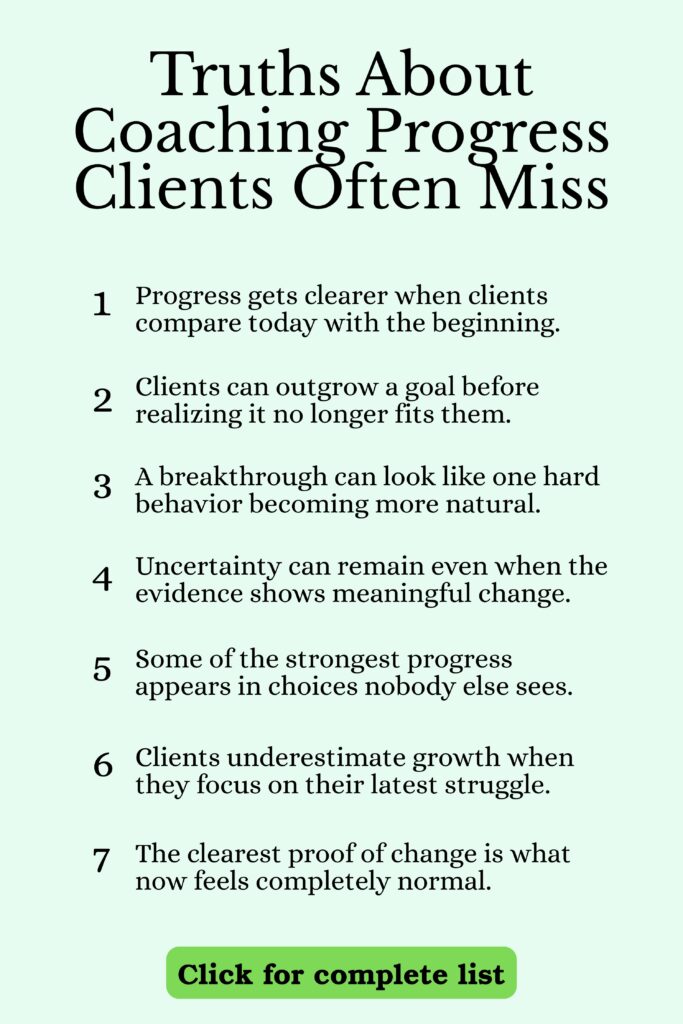
Measure coaching progress by comparing the client’s current evidence with a clearly recorded starting point. Both clients and coaches can forget how difficult something felt six weeks earlier, especially when change has happened gradually.
Research supports the value of making progress visible. Benjamin Harkin and colleagues reviewed 138 experimental studies involving 19,951 participants and found that interventions designed to increase progress monitoring also increased goal attainment. The effect on goal attainment was stronger when progress was physically recorded or reported.
That does not mean every coaching goal needs a numerical dashboard. It does mean you should decide in advance what evidence would count as progress.
SEE ALSO: If you’re a coach looking to streamline your administrative tasks and save time, check out our Coaching Administration Software. It’s a simple, effective solution designed to help you focus less on paperwork and more on what matters—coaching your clients. From scheduling to client management, our software gives you the tools to run your business efficiently. Ready to reclaim your time and boost productivity? Click or tap here.
For one client, that might be:
- delivering three presentations without reading from a script
- holding one difficult employee conversation each week
- completing four targeted networking conversations in a month
- reducing unplanned evening work from five nights a week to two
- completing an agreed action before the next session
For highly individualized goals, you can also borrow the logic of Goal Attainment Scaling, developed by Thomas Kiresuk and Robert Sherman. The basic idea is to define measurable levels of attainment for an individual goal in advance, rather than waiting until afterward to decide whether the outcome was good.
A coach might therefore define the expected outcome for a delegation goal as “delegates three recurring operational tasks and no longer takes them back unless an agreed escalation condition occurs.” Better-than-expected and worse-than-expected outcomes can also be defined in advance.
You do not need to turn your coaching practice into a research study. The useful principle is simpler: define success before you measure it.
This matters commercially too. When clients can see the change they have created, renewal conversations do not have to depend on vague impressions. The same principle is explored in A Bird in the Hand: The Simple Math of Client Lifetime Value for Coaches.
Inside LCH Core, the Progress Stream can bring client activity together over time, while the Engagement Report gives you another way to review participation and engagement. Use those records as evidence to discuss, not as a substitute for the coaching conversation.
SEE ALSO: If you’re a coach looking to streamline your administrative tasks and save time, check out our Coaching Administration Software. It’s a simple, effective solution designed to help you focus less on paperwork and more on what matters—coaching your clients. From scheduling to client management, our software gives you the tools to run your business efficiently. Ready to reclaim your time and boost productivity? Click or tap here.
How Often Should You Ask Clients to Complete Assessments?
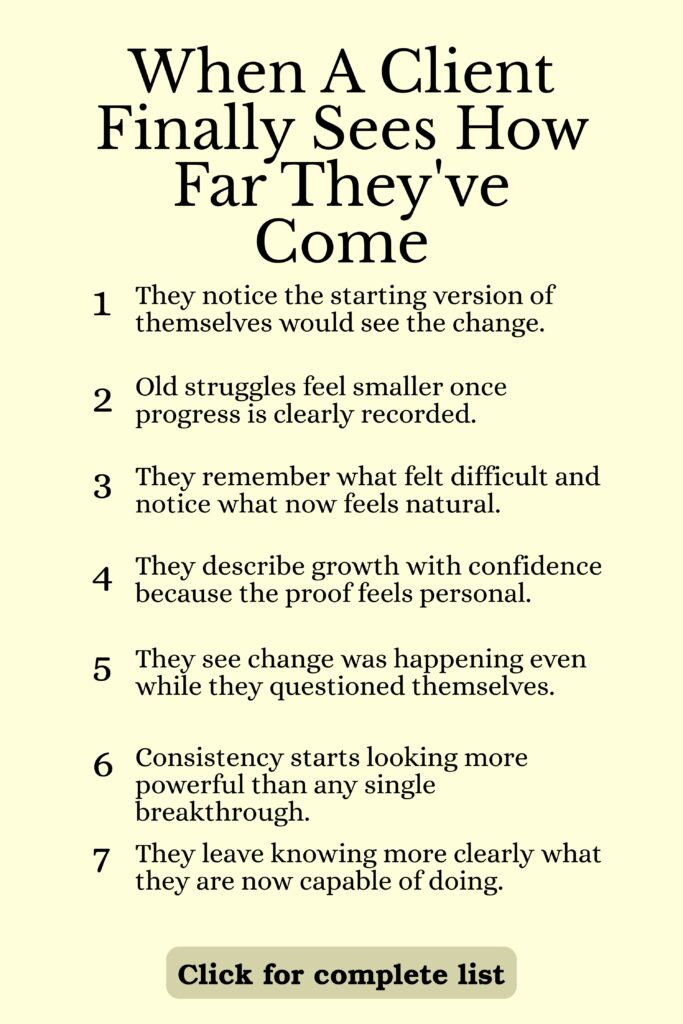
Assessment frequency should follow meaningful coaching decisions, not a fixed habit of sending forms. A useful cadence gives you enough information to notice change without making clients feel as though they are constantly being tested.
For a 12-session coaching engagement, one practical pattern might look like this:
- Before session one: baseline assessment and intake
- Sessions two to five: focused assessment only when a specific issue needs clarification
- Around session six: midpoint progress review
- Between sessions: very short pulse checks where a target behavior or action needs monitoring
- Around session twelve: end-of-engagement review against the original baseline
That does not mean every client needs exactly this schedule.
A client working on a measurable weekly sales behavior may benefit from a brief weekly pulse. A client exploring a major career transition may need fewer formal ratings and more milestone-based reviews.
Avoid assessment busywork. If you send a 25-question form before every session but rarely compare the answers, discuss them, or change the coaching because of them, you have created a ritual rather than a useful system.
For assessments you do want to repeat, reusable, assignable and schedulable coaching tools can make consistency easier without forcing you to rebuild the same material for every client.
SEE ALSO: If you’re a coach looking to streamline your administrative tasks and save time, check out our Coaching Administration Software. It’s a simple, effective solution designed to help you focus less on paperwork and more on what matters—coaching your clients. From scheduling to client management, our software gives you the tools to run your business efficiently. Ready to reclaim your time and boost productivity? Click or tap here.
What Are the Benefits of Coaching Forms and Assessments?
In your coaching business, you want your clients to get the most from your coaching and from the work they put into it. Assessments are one way to see whether that is happening.
By asking your clients to complete assessments, you are able to track their progress and pinpoint areas that may need more focus and development. After your clients complete coaching forms, you can change course when the evidence suggests that another approach would be more useful.
Assessments can also help you see where the coach-client relationship should go. You can learn how much structure and involvement a client wants from you, identify priorities earlier, and create a clearer game plan around the obstacles getting in their way.
Coaching forms and assessments can also offer clients motivation through evidence. A client may feel as though “nothing is changing” until they compare where they are now with the answers they gave two months earlier.
That comparison can work in the other direction too. If a client believes they are making progress but the behavior they wanted to change has remained the same, the assessment gives you something concrete to examine together.
Either way, the value is clarity.
SEE ALSO: If you’re a coach looking to streamline your administrative tasks and save time, check out our Coaching Administration Software. It’s a simple, effective solution designed to help you focus less on paperwork and more on what matters—coaching your clients. From scheduling to client management, our software gives you the tools to run your business efficiently. Ready to reclaim your time and boost productivity? Click or tap here.
Where LCH Core Fits
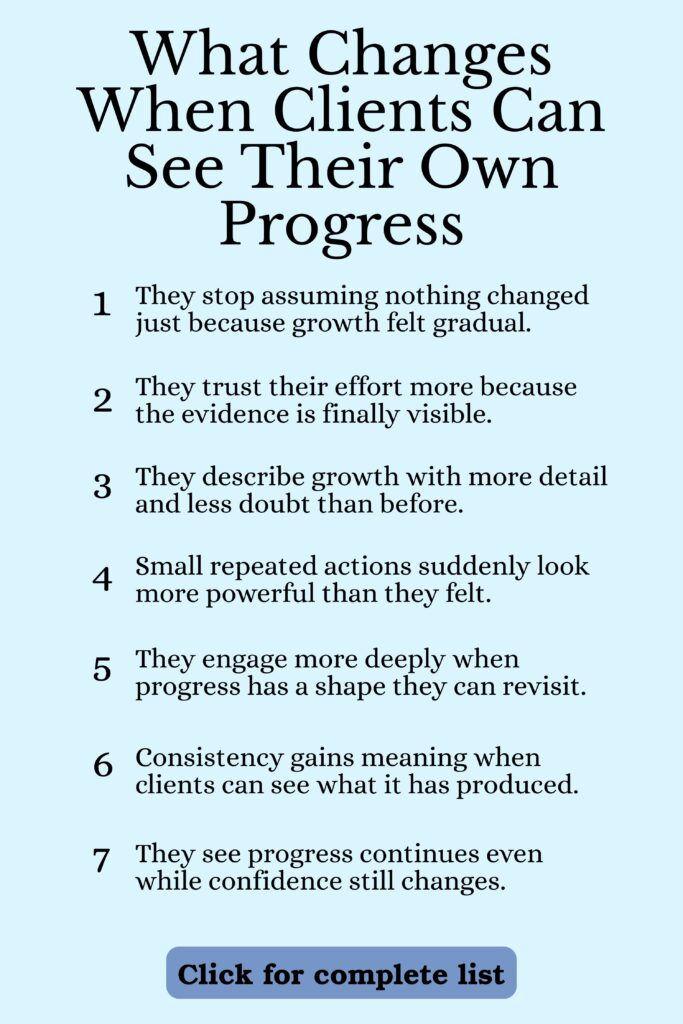
LCH Core fits most naturally after you have decided what you want to assess and what you will do with the result. The software should support your assessment process, not determine it.
At the beginning of coaching, client management (CRM) can keep client profiles, notes, and intake information connected. A Welcome Package can collect forms alongside the welcome letter and coaching agreement with electronic signature.
During coaching, journals, worksheets, goals, action items, and resources can carry assessment insights into the work between sessions. If a progress review reveals that the client needs a new experiment, you can translate that into a specific goal or action rather than leaving the insight in a completed form.
For review, the Progress Stream and Engagement Report can help you examine activity and progress alongside the client’s own reflections.
For a broader look at how client management, progress tracking, scheduling, payments, onboarding, and coaching tools fit together, see Best Coaching Software for Life Coaches: What to Look For Before You Choose. Setup information is also available through the Life Coach Hub support center.
Frequently Asked Questions About Coaching Assessments
What assessments should life coaches use with clients?
Life coaches should use assessments that directly support the client’s coaching goal or a decision that needs to be made. Useful categories include intake assessments, values or goals assessments, issue-specific assessments, short progress checks, and milestone or end-of-engagement reviews.
SEE ALSO: If you’re a coach looking to streamline your administrative tasks and save time, check out our Coaching Administration Software. It’s a simple, effective solution designed to help you focus less on paperwork and more on what matters—coaching your clients. From scheduling to client management, our software gives you the tools to run your business efficiently. Ready to reclaim your time and boost productivity? Click or tap here.
When should a coach use an assessment?
A coach should use an assessment when structured information will help establish a baseline, clarify the coaching focus, measure progress, or decide what to do next. An assessment is less useful when the answers will simply be filed away without affecting the coaching.
How often should coaching clients complete progress assessments?
Clients should complete progress assessments often enough to reveal meaningful change, but not so often that the process becomes repetitive. For many coaching engagements, a baseline, midpoint review, end review, and a few short pulse checks provide more useful information than constant lengthy questionnaires.
What is the difference between a coaching intake form and a coaching assessment?
An intake form primarily collects information you need at the beginning of the relationship, while an assessment examines something you want to understand, compare, or track. One document can sometimes do both jobs, but the purpose of each question should still be clear.

How do you measure progress in coaching?
Measure coaching progress by defining what success looks like, recording the starting point, and comparing later evidence against it. Depending on the goal, that evidence could include behavior, completed actions, ratings, milestones, client reflections, or other observable outcomes.
Should clients repeat the same assessment during coaching?
Clients should repeat selected parts of an assessment when comparison will help show change. There is little value in repeating a long assessment if only three questions relate to the goal you are actually tracking.
How do you choose a good coaching assessment?
Choose a coaching assessment that has a clear purpose, relates directly to the client’s goal, produces usable information, and fits within your coaching role and qualifications. Avoid using an assessment simply because it is popular or because you already have a copy.
SEE ALSO: If you’re a coach looking to streamline your administrative tasks and save time, check out our Coaching Administration Software. It’s a simple, effective solution designed to help you focus less on paperwork and more on what matters—coaching your clients. From scheduling to client management, our software gives you the tools to run your business efficiently. Ready to reclaim your time and boost productivity? Click or tap here.
Can life coaches use psychological or diagnostic assessments?
Life coaches should distinguish coaching assessments from tools intended for clinical diagnosis. Reflection forms, goal assessments, progress reviews, worksheets, and coaching questionnaires can support coaching, while diagnostic instruments may require specific professional qualifications or training.
How Can Assessments Strengthen Your Coaching Practice?
The coaching assessments and forms you use are most valuable when they help you and your clients decide what to do next. A form by itself changes nothing.
A useful assessment establishes a baseline, sharpens the focus, checks progress, and gives you evidence to review. That makes it easier to adjust the coaching when something is not working and to recognize progress when it is.
As a coach, you are trying to help clients move from conversation into meaningful change. Assessments give you a structured way to check whether that change is actually happening.
For coaches who want the forms, client records, goals, action items, and progress tracking connected in one system, LCH Core can support that workflow while leaving the coaching decisions where they belong, with you and your client.
Sources
Harkin, Benjamin, et al. “Does Monitoring Goal Progress Promote Goal Attainment? A Meta-Analysis of the Experimental Evidence.” Psychological Bulletin, vol. 142, no. 2, Feb. 2016, pp. 198-229. PubMed, https://pubmed.ncbi.nlm.nih.gov/26479070/.
SEE ALSO: If you’re a coach looking to streamline your administrative tasks and save time, check out our Coaching Administration Software. It’s a simple, effective solution designed to help you focus less on paperwork and more on what matters—coaching your clients. From scheduling to client management, our software gives you the tools to run your business efficiently. Ready to reclaim your time and boost productivity? Click or tap here.
Kiresuk, Thomas J., and Robert E. Sherman. “Goal Attainment Scaling: A General Method for Evaluating Comprehensive Community Mental Health Programs.” Community Mental Health Journal, vol. 4, no. 6, Dec. 1968, pp. 443-453. PubMed, https://pubmed.ncbi.nlm.nih.gov/24185570/.
Read this next
Coaching Techniques: Asking Life Coaching Questions
Help your clients gain clarity by playing devil’s advocate when asking coaching questions.
Read More
Powerful Coaching Questions Gallery
These powerful coaching questions will help you act as your own life coach. Ask them and listen to your inner voice.
Read More
How to Incorporate Journaling into Your Coaching
The following tips can help you to smoothly incorporate journaling into your coaching courses.
Read More